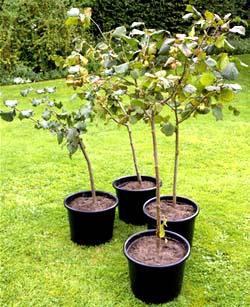
Trees in October

Be sure to rake up all the fallen leaves and put them into the compost. If the leaves are left, they can encourage fungal growth, other diseases and insects.
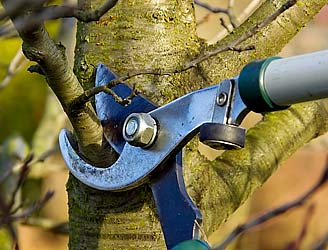
Pruning a treeOctober is also a good time to get deciduous hedges and those big trees pruned before the winter gales.

A tree may need pruning for a variety of reasons:
· to remove diseased or storm-damaged branches
· to thin the crown to permit new growth and better air circulation
· to reduce the height of a tree
· to remove obstructing lower branches
· to shape a tree for design purposes
Why not give us a call today for an estimate?

Window is closing for dormant spraying

Dormant spraying your fruit trees for pests is best done starting in November up until March if the weather stays cool.

Spraying fruit trees during the cool seasons, November through March, can help control pests that take up residence in the cracks and crevices, according to Ross Penhallegon, horticulturist with the Oregon State University Extension Service. Such dormant spraying is more effective than waiting until the weather warms and pests become active.

Some sprays that can be used are:

Apples: Spray copper before fall rains; dormant oil once or twice from January through March; lime-sulfur in January or February (just before buds open) and wettable sulfur just after petal fall.

Apricots: Spray copper before the fall rains and dormant oil in February.

Cherries: Use wettable sulfur or lime-sulfur applied weekly during blooming for brown rot. Information on synthetic sprays to control cherry fruit fly is available at your local county office of the OSU Extension Service.

Pears: Spray copper before the fall rains; spray lime-sulfur two to three times beginning in fall, again during winter, and finally in March just before buds open; spray dormant oil in early spring before buds open and wettable sulfur just after petal fall.

Peaches: Spray copper or a good dormant fungicide three to four times between December and bud break. Spray copper or lime-sulfur before fall rains and in spring just before bud break; apply sulfur weekly during blooming and again after all petals have fallen.

For the full list and further information, click here.

How to Help Your Trees in a Drought

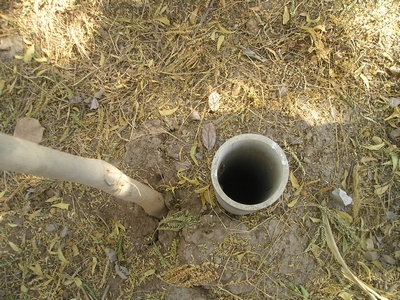
One way to do deep root watering

Trees need deep root watering. So during water restrictions, when you are allowed, give them a good long drink. And then mulch, mulch, mulch, to slow evaporation and keep the ground cool.

Minimize or stop pruning or trimming to avoid scorching your shrubs.

For best results, avoid planting until the fall. Local nurseries will often agree to keep your trees or shrubs until fall if you pay for them now when you have more of a choice.

Wait to prune your trees until after the leaves fall

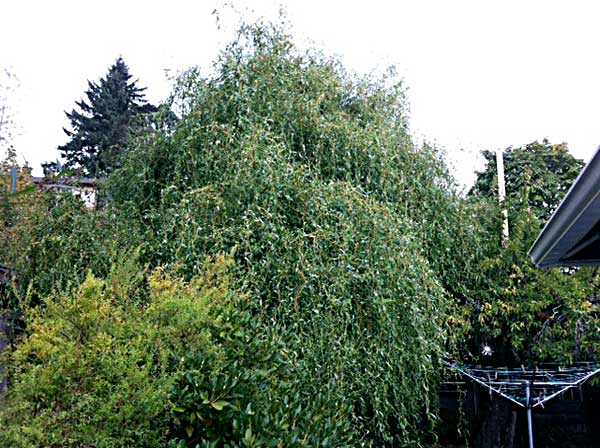
Willow tree
OK! OK! I’ll wait a bit.

Pruning too soon can harm your trees and shrubs.So, when it comes to fall pruning, procrastination is the way to go.

Pruning a little branch or two may be OK, bigger tasks like thinning the crown or cutting a big limb should wait unless the tree is a hazard. If it is a hazard, you should likely call the professionals in any case. 

  • In early autumn, wounds from pruning close more slowly and plants are at risk for fungal diseases. For most trees, the best time for major pruning is November to early spring because wounds close faster.
  • Pruning in late summer and early autumn may also stimulate new growth, which has little time to harden before cold weather comes.
  • If you must prune in fall, wait until trees drop their leaves and are dormant—usually October or November. Then, you can see the tree’s structure and identify disease and insect problems more easily.
  • Dormancy (especially late winter to early spring) is also a good time to prune evergreens because vigorous spring growth will hide pruning wounds.
  • One exception to the no-fall-pruning advice is that you should remove dead, diseased, and damaged wood as soon as possible –– for tree health and your safety. Take proper safety precautions at all times. Hire a professional tree service to remove big limbs, high branches, and any other tree job that you’re not prepared to do.


Is it OK to plant a tree in August?

trees_in_containersWell, yes and no. It depends.

Are you purchasing a tree that is in a pot, or a tree whose roots are balled and burlapped?

If the tree is pot bound, wait until it drops its leaves in the fall, then fix the roots as described here.

If not pot-bound, container plants  can be planted now.  But if your plant is  pot-bound  and requires a lot of root system correction, it could suffer at least as badly as a freshly dug ball and burlapped tree.

It’s more about when they were dug than when they are planted. Trees can survive in the ground just as well (and probably much better) than just sitting around the nursery. The timing must be based on the condition of the tree more than the actual time of year.

Generally speaking, planting at a better time (between fall and early spring), would provide a less stressful situation for a tree. If you do plant now, choose a healthy non-pot-bound specimen and be sure to water and mulch properly.

Young Trees Need Lots of Water in July

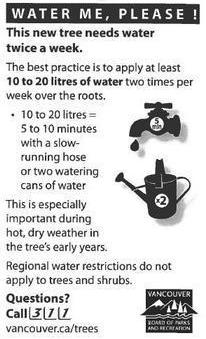
street-trees-watering-tagYoung trees, whether planted by you or by your municipality need lots of help to get established.
The City of Vancouver is asking residents to please help by watering new trees a couple of times a week. We should all be doing the same.

The whole of the CVRD is now under Stage 2 Watering restrictions, but these do not apply to trees and shrubs. For everything else, it is twice a week between the hours of 6 am – 9 am and 7 pm to 10 pm. While the above link is to the CVRD information, it is true for Duncan, Ladysmith, Lake Cowichan and North Cowichan as well.

Pruning Apple Trees

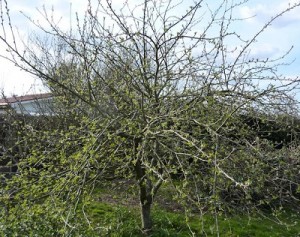
overgrown apple tree
This tree seriously needs to be Godolphinized!

Most fruit trees should be pruned when they are dormant. Most gardeners are inside shivering in their boots during dormant season, as you well know, if your tree is overgrown!

Unless your apple tree is declining or diseased, it can still be pruned.

It is very hard to kill an apple tree by pruning it, but neglecting it is an invitation to disease and pests. So give us a call today, while there is still time, and you will be thankful later in the year.

Spraying time again for fruit trees

Sanitation

Disease problems in fruit trees often overwinter on dried fruits and leaves that fell to the ground in the Autumn and were never cleaned up. The spores stay to re-infect the tree in the spring as the leaves begin to emerge. This is why sanitation beneath and around your fruit trees is critical. Rake up and removes all debris from the tree,  each year. Dead or diseased branches must be pruned and removed each spring.

Dormant Oil

You should apply dormant oil spray to your fruit trees before they begin to bud out. For apple and pear trees, dormant oil is used to control scale and spider mitesPlum, peach, apricot and cherry require lime-sulphur spray.

The spray must be applied at the right time with complete coverage of the tree. Dormant oil or lime-sulphur should be sprayed on the tree while it is still dormant. Thin out excessive growth before spraying.

DO NOT combine dormant oil applications with lime-sulfur, or pesticides containing sulfur, as tree injury may result.

Here is a link to a dormant spray guide. Learn more about dormant spraying here.

Inspect Your Maple Trees

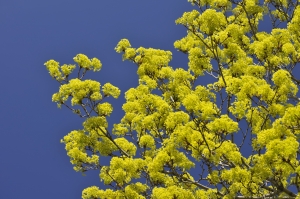
flowering_mapleWith the heavy rains we have had recently and with all the new growth of suckers and leaves, some maples may be in danger of splitting. Look at your maples closely and if something does not look quite right, give us a call. Large branches have been known to suddenly fall and as they are very, very heavy, it can be dangerous.

Balsams or “Grand Firs” are also very heavily burdened with cones right now, as well as new growth. The tops can snap suddenly with the excess weight.

Why worry, when you can receive expert advice and help if you need it?